Posted on

Observations for 2026 March 03


Today was the day to visit Waiotapu. As usual, we arrived as early as possible. The objective was to quickly assess the situation at the Waiotapu Geyser (#70) and then based on those observations, either wait or go watch the Lady Knox spectacle.

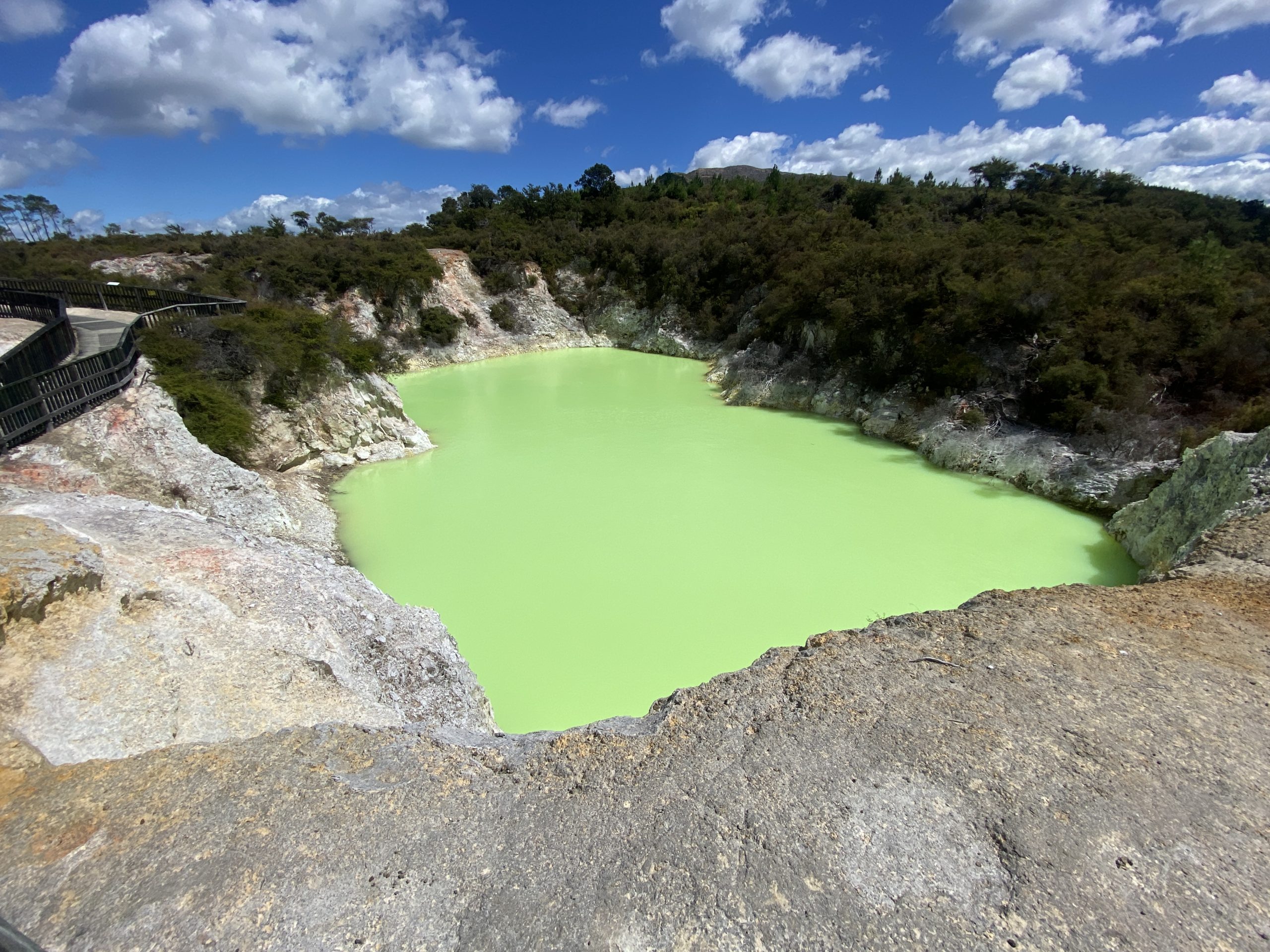
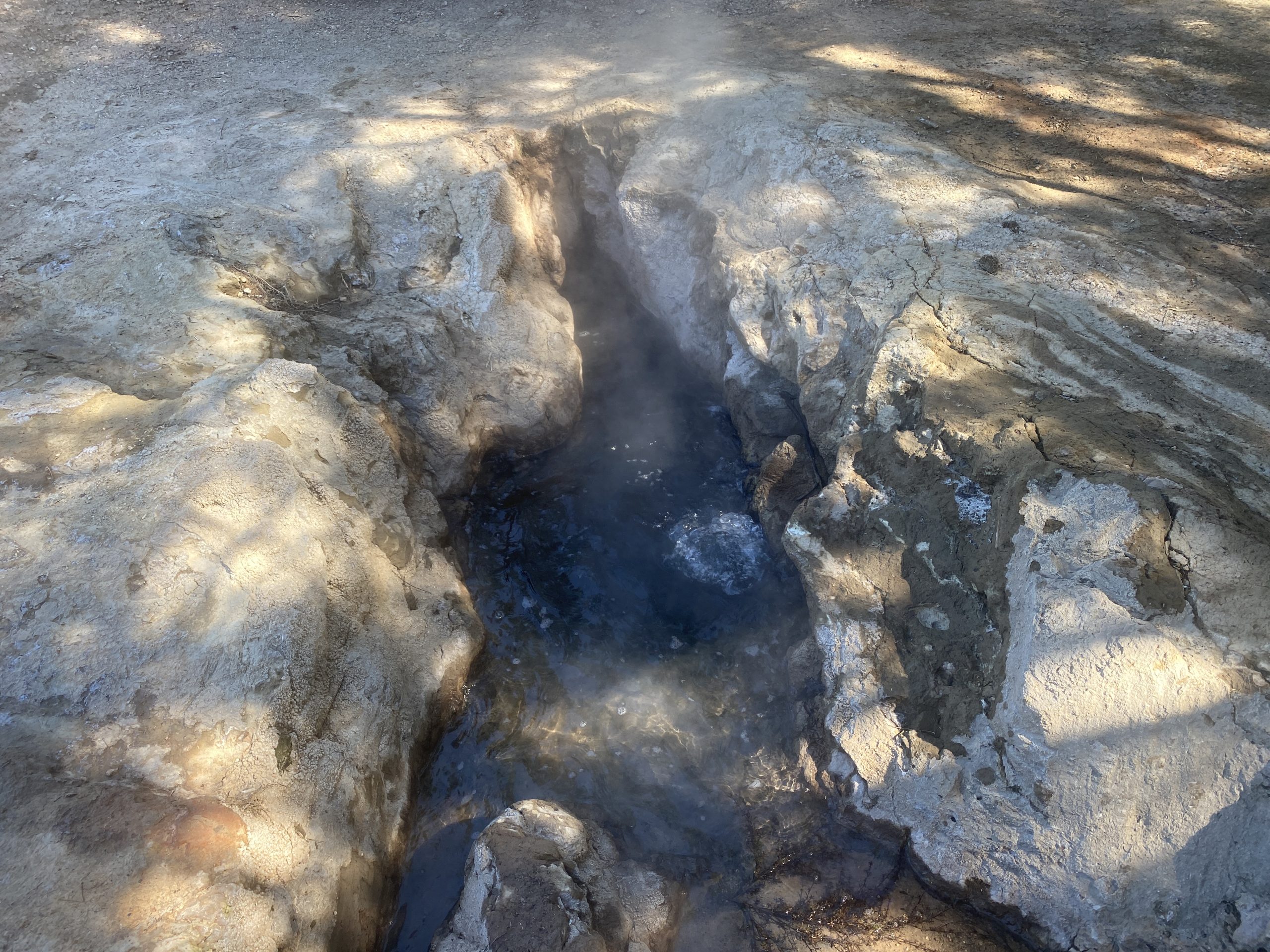
The first thing noticed was that the water level in Rotokarikitea/Devil's Cave appeared to be down at least a meter, based on the yellowish bathtub ring above the current water line. When the sun came out, the water was the brilliant greenish, almost phosphorescent color we'd seen during previous visits.

Rotokarikitea/Devil's Cave at Waiotapu.

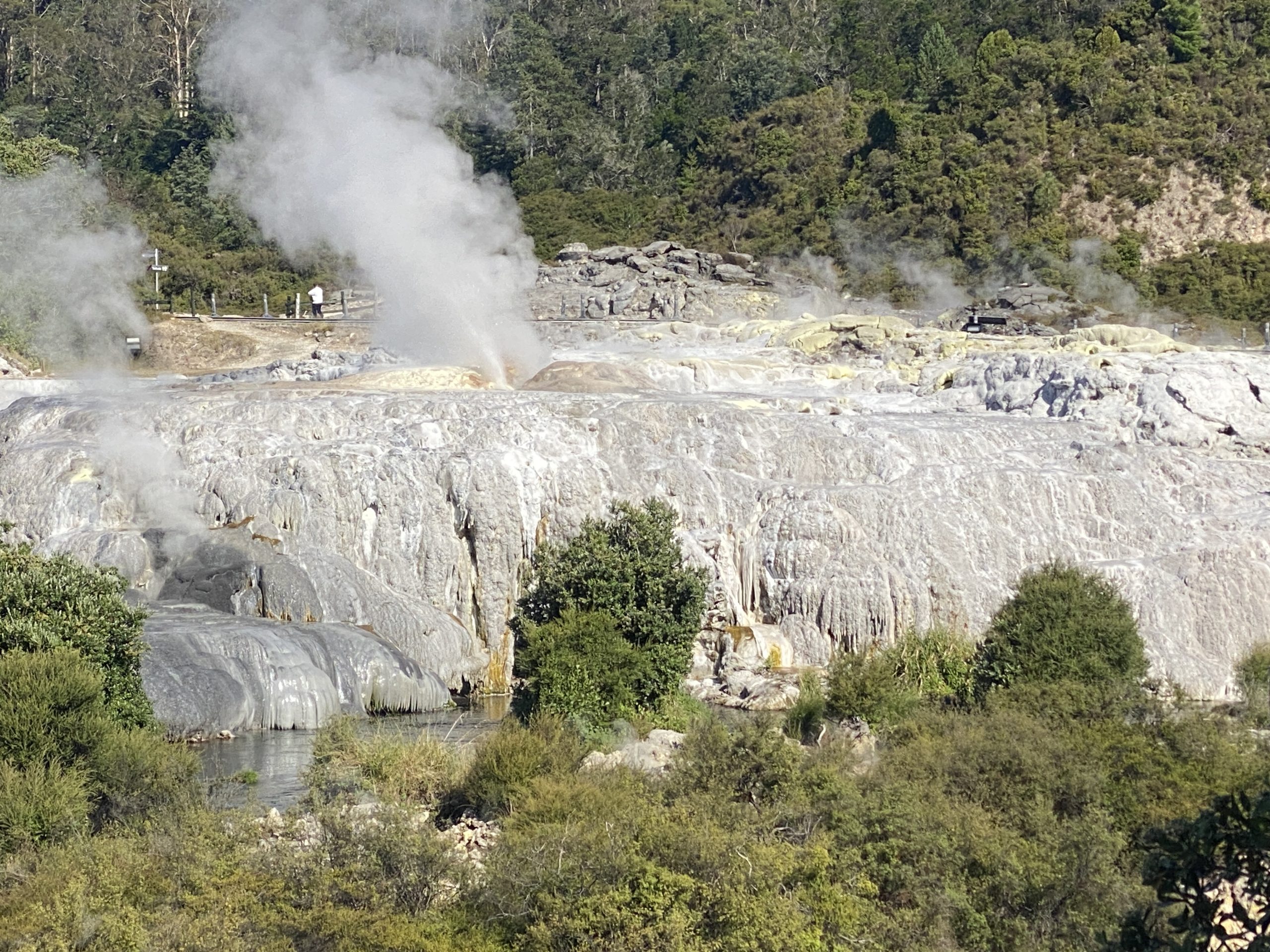
When we got to the geyser, it was pretty obvious that it had not erupted recently. The formations surrounding the vent were completely dry, despite it being a cold, humid morning. The vent was mostly in shadow, but there was no indication of any water visible in the vent. Twenty minutes later, everything appeared to be the same, so we decided to join the crowd headed to see the induced eruption.

There was a long line of cars headed that way, and we learned that it was possible to pay for admission at the gate there. I don't remember that being the case when we went there in 2019. In any case, that would not have altered our plans. We found some open seating down at the front, in what at the time appeared to be a location that wasn't down-wind.

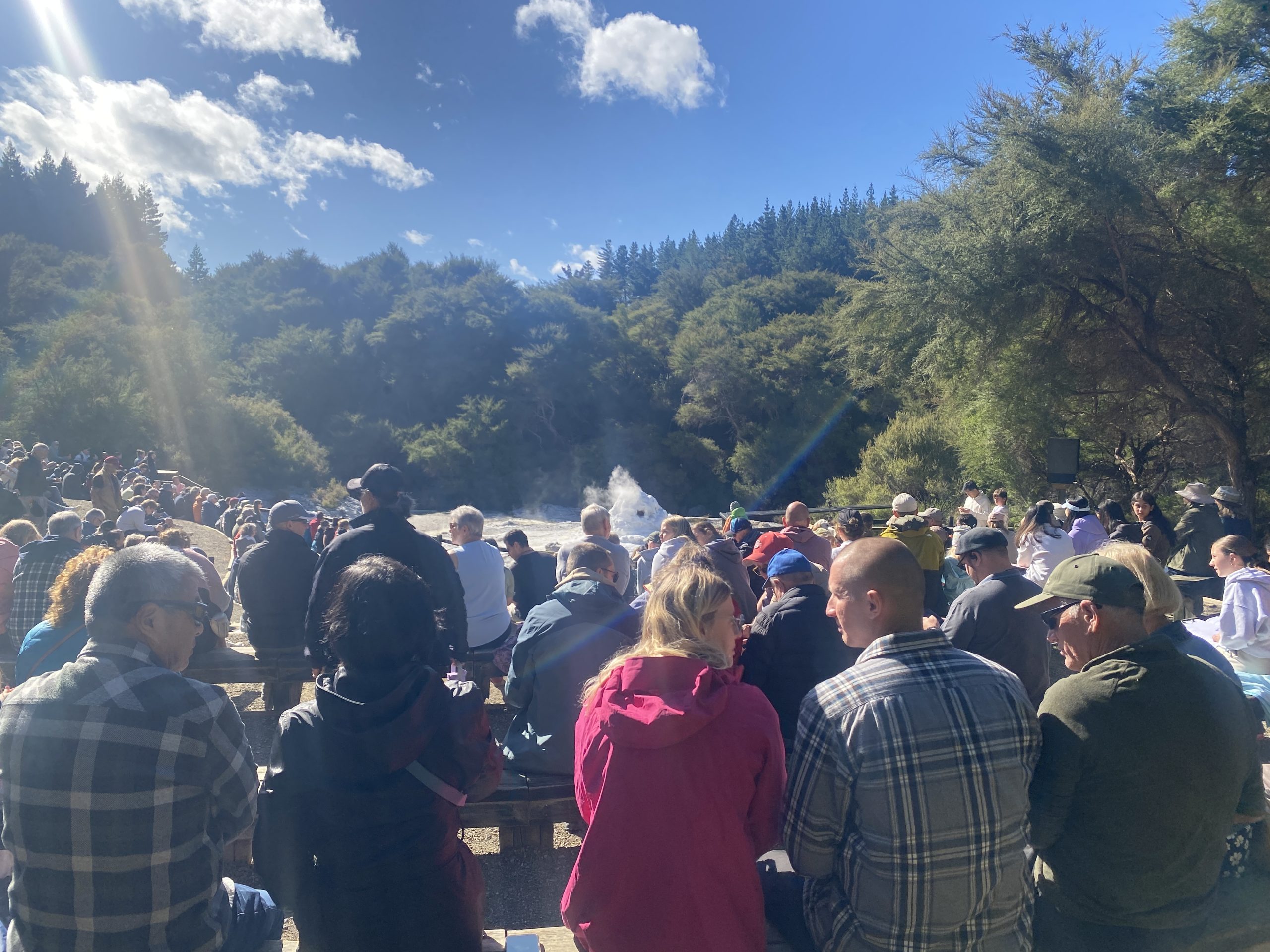
The stadium was packed, more so than our previous visit, which was still pretty full. Previously, there had been a small talk about the history, the soap was introduced and once the geyser started to overfoam the guide let it be the center of attention. The eruption we saw lasted well over a half hour, and was still erupting as we left.

Crowd at Lady Knox

This time there was entertainment. The guide sang a Maori song as the overfoaming started, so when the eruption started, we couldn't hear it, despite some roaring as it reached maximum height. Then the eruption died down completely, ending at just over a minute in duration. There was no attempt at any afterplay splashing that I could see. On the whole, a disappointing experience. Years ago we managed to induce better eruptions from #42w.

We returned to the main thermal area a pretty much the end of the line of vehicles, but we did get a decent parking spot. Returned to the geyser overlook, and learned that we hadn't missed anything. The area around the vent was still dry, and even with the better sun angle, there didn't appear to be any water visible in the vent.

Also while we were gone, it got windy at the overlook location, which made observing distinctly uncomfortable. Suzanne left me to do that. Just a short distance away there were some picnic table in the sunlight where the breeze was tolerable, so I waited there for ten to fifteen minutes, then returned to the overlook to be disappointed by no change in the geyser.

Finally gave up a couple of hours later. Figured that there wasn't going to be enough time for the geyser to show signs of life before closing time. Did do some videos of Champagne Pool and the features around it. There was one vent that was splashing slightly, which was the sum total of the natural eruption activity I saw today.

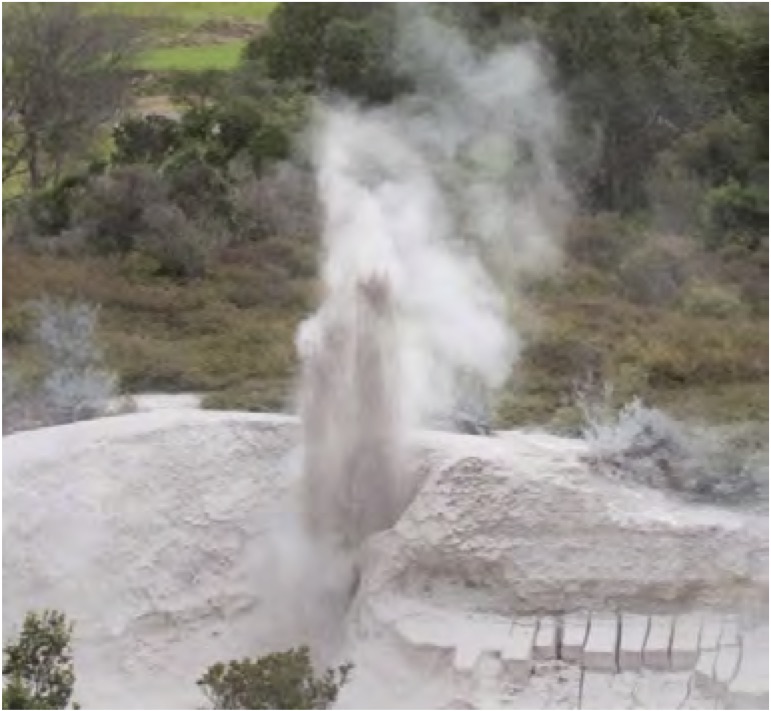
Since it was just down the road, we stopped in at the mudpots again. The activity there was much more entertaining. There were a couple of areas that every so often would explode with mud thrown in all directions, reaching heights of about four meters.

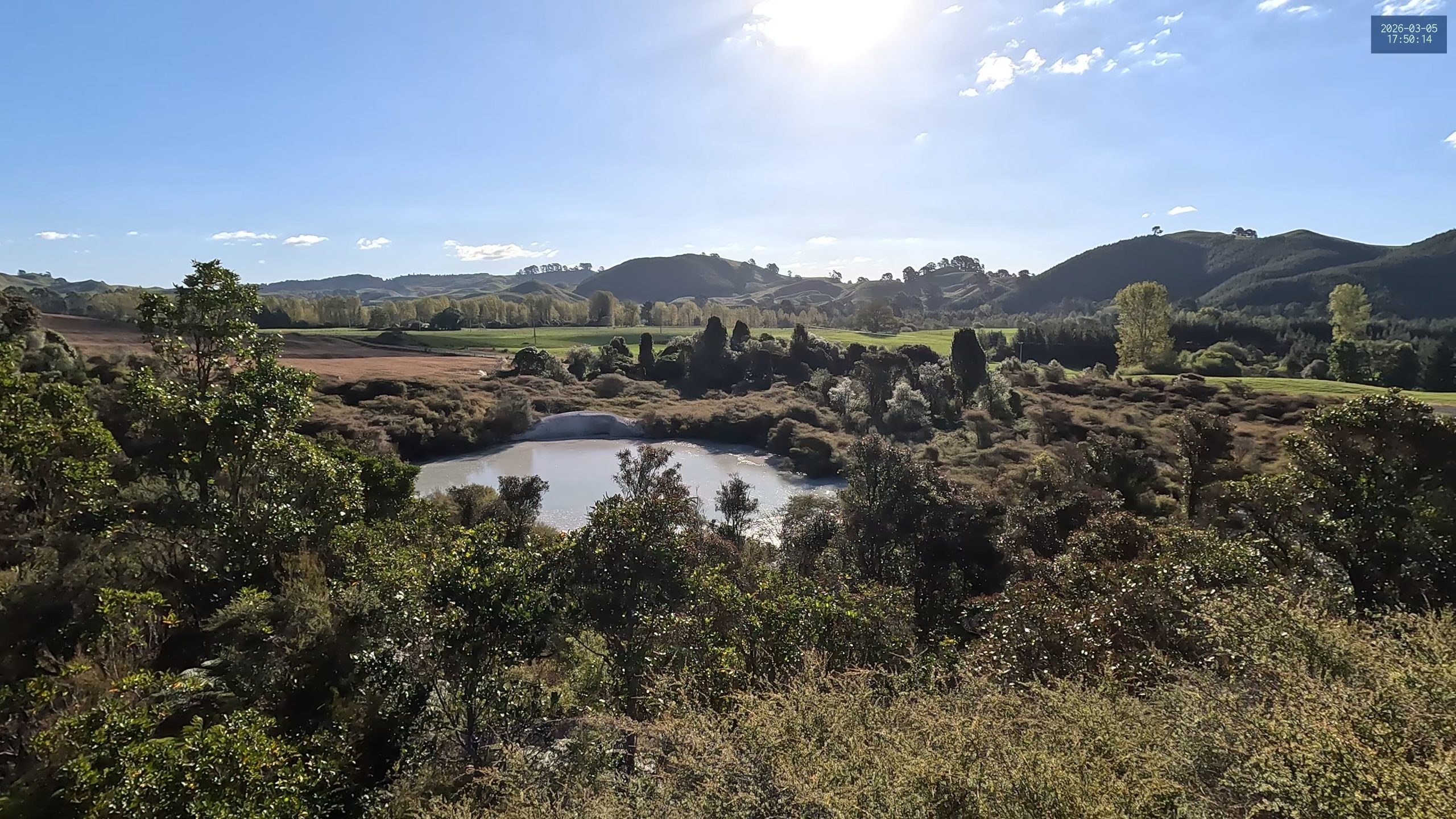
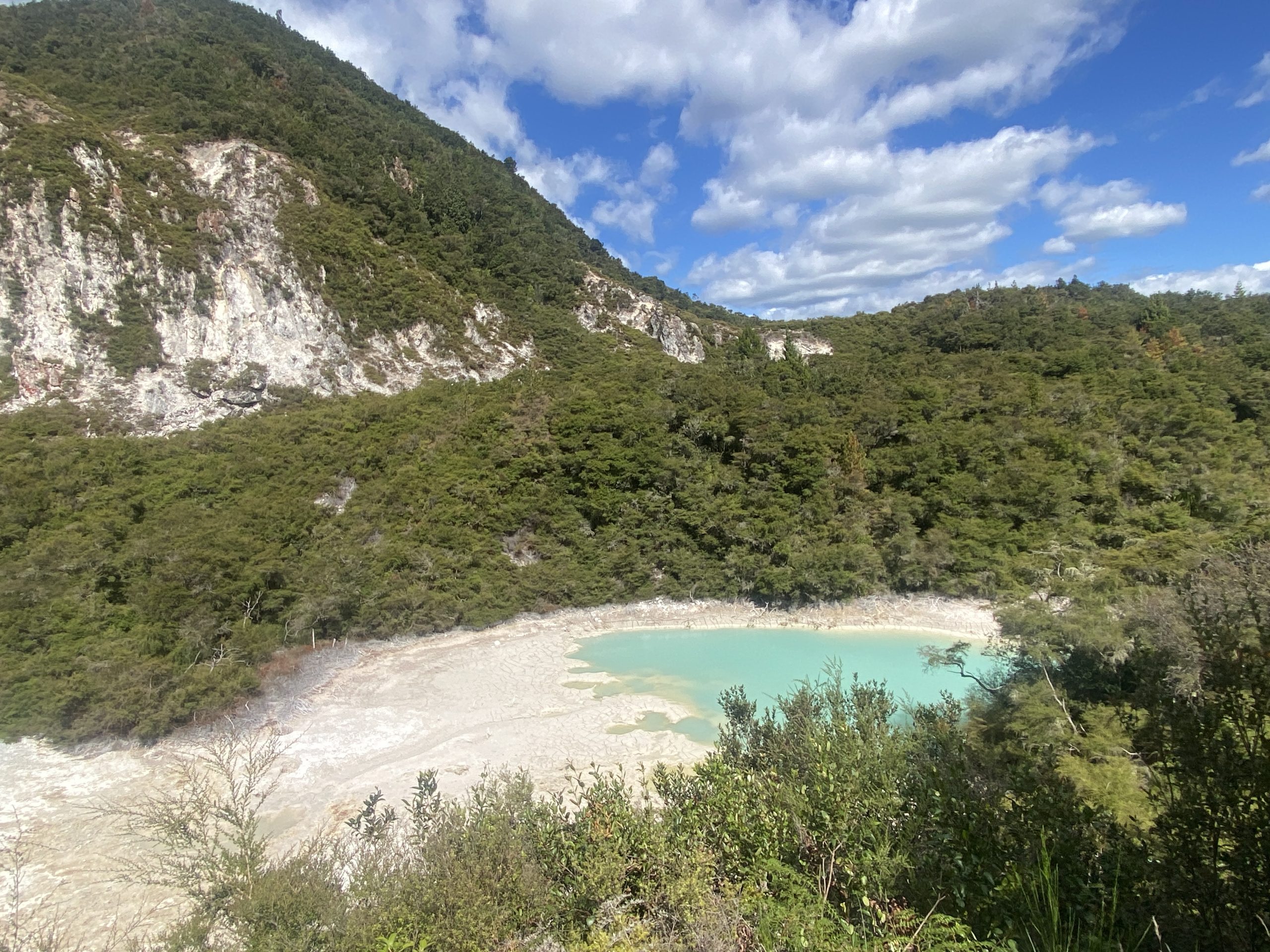
Finally, on the drive back, we stopped at the trail to the Crater Lake overlook. This is a warm thermal pool at the base of Rainbow Mountain. It used to be two craters, but the one to the north was more of a mud flat. The color of the water is that milky, opalescent blue that would otherwise indicate that it was much hotter.

Crater Lakes.

At this point I'm thinking that should there be a future visit to New Zealand, there will be no need to visit Waiotapu.


Posted on

Observations for 2026 March 02


On our way north from Tongariro for our week in Rotorua, we stopped in at Tokaanu again, just to confirm that nothing much had changed. It was a cold and windy morning (at Tongariro the weather forecast included snow showers). Houni and Matawei were identical. Taumatapuhipuhi seemed to be a bit murkier (it probably rained overnight), and a stick we'd noticed was no longer in the vent, but the activity seemed unchanged.

The previous visit I had noticed sounds coming from the area to the south/left as I had entered the thermal area, but had not been able to see the source of the noise. Maybe it was because it was early and not afternoon, but this time I saw the source. It was a small sputterer, with a height of perhaps 5-15 cm, situated in a alcove at the southern edge of Huri Kariori (#11), a large pool next to the stream and entrance walkway.

After a while, it seemed to die down, and was harder to spot even knowing it was there. When we left about 15 minutes later, it was active, but still seemed subdued compared to what we saw on arrival. The few references don't mention any activity there, despite the pool having a name.

Sputterer at Tokaanu Huri Kariori (#11). 2026 March 02. Video by H.Koenig.

Later in the afternoon, we stopped at the Waiotapu Mud Pots. It turned out there was major construction on State Highway 5 and we had to wait for at least 1/2 hour to make the final kilometer to the junction road. Fortunately there are alternative routes when we visit Orakeikorako in a few days.

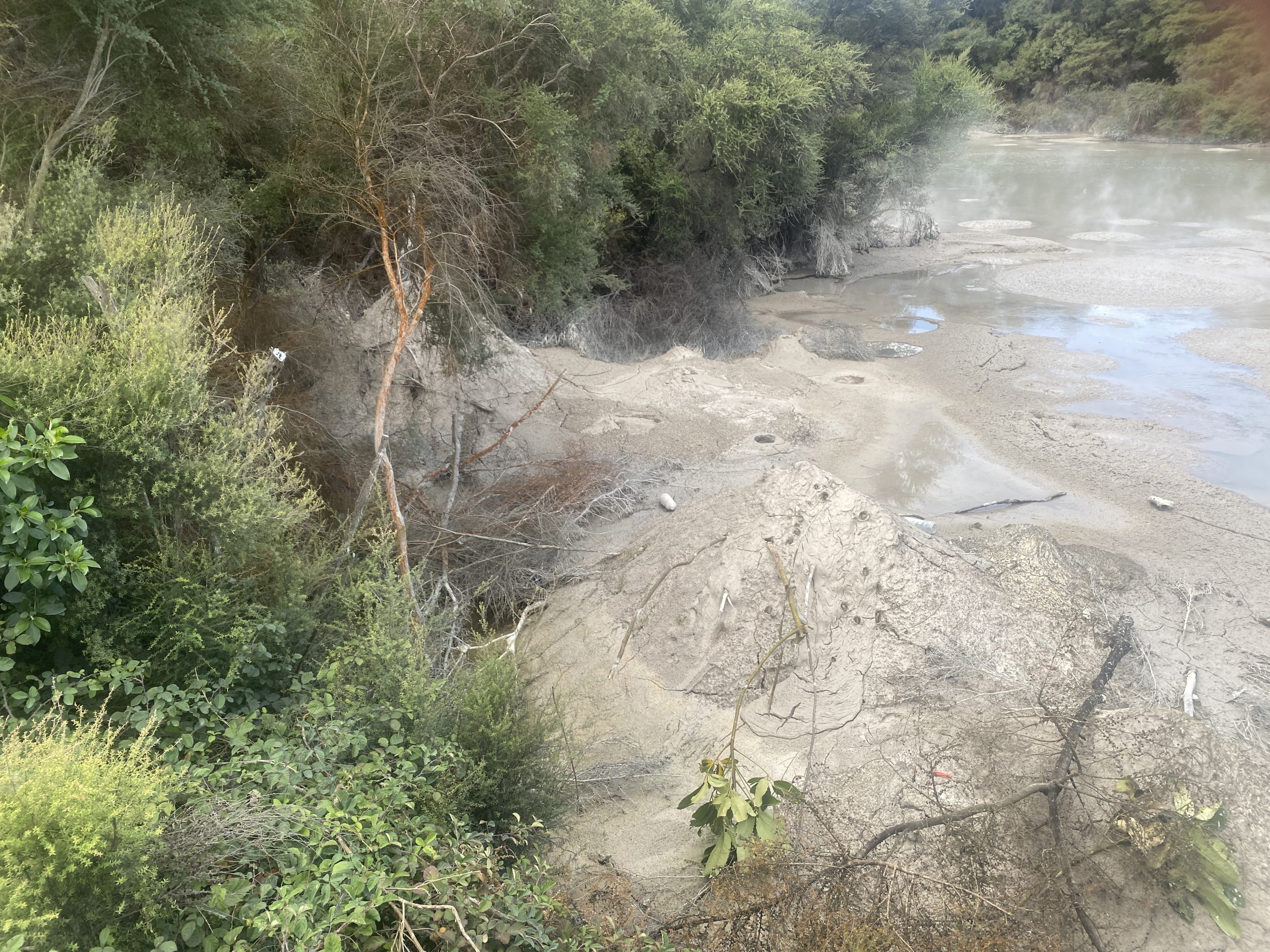
The mudpots looked much like they have in previous visits. They are a large, gray soupy pool with lots of thicker islands scattered mostly along the shoreline. Some of these islands were explosively active, with mud being splattered a couple of meters high. Also, near the entrance to the walkway were a couple of older, inactive mud cones about 1-1/2 meters high.

Waiotapu Mudpot cones. 2026 March 02

Posted on

Observations for 2026 February 28


First up was the CO2 cold water Mokena Geyser at Te Aroha. This was the first eruptive feature of our 2019 visit, and it was unimpressive that visit. Mostly it just spit and sputtered and made a lot of noise. But this time we got to see some real eruptions.

When we arrived there was a slight wisp of vapor coming from the vent opening. Otherwise it looked like there was little hope of observing any sort of activity. After about twenty minutes, the sound of water moving could be heard below the southernmost hatch leading to the spa intake. Within a few minutes the sound got louder and then the eruption started with no warning.

This was a thin jet of fizzy water that quickly reached an estimated six to seven meters above the vent. The jetting stayed strong for about a minute, then started to subside. By about two minutes, the jetting paused, then restarted. This activity continued for another 4-1/2 minutes, with the pauses getting longer and the heights of the jets decreasing. By the end, the height was maybe ten centimeters lasting a couple of seconds. Then all was quiet again.

There had been reports of intervals around forty minutes, and based on how long it took for us to see the eruption, we decided to stick around and catch the next eruption, assuming the interval would be in the forty minute range.

At around forty minutes, I could hear water moving again below that hatch, and within five minutes, we got a secon eruption with an interval around 45 minutes. This time the eruption didn't seem as strong or as high. I estimated the height to be four meters at most, and the first pause occurred around 1-1/2 minutes into the eruption. But the pauses and weak jetting continued for almost as long as the first eruption, finally ending at six minutes.

Mokena Geyser @ Te Aroha. 2026 Feb 28. Video by H.Koenig

I reviewed my video of Mokena from 2019 and noticed a few differences. First, the vent has changed. The current one has a wider opening and is flat, while the earlier was more nozzled. Also, a section of the retaining wall at the gate was removed. So it appears that the "geyser" got a upgrade over the past seven years.

A few hours later we finally got to a real thermal area— the Tokaanu Thermal Reserve. When we last visited in 2023, we got to see multiple eruptions of Taumatapuhipuhi and an eruption of Hoani. This time we did not see any geyser activity.

Taumatapuhipuhi (#13) was in a near constant start of small ebullition over the vent, maybe 8cm high. Every so often there would be a rumble and belch from the southern end of the vent. We saw no evidence of any vent there in the previous visits. The area around the geyser show no signs of activity, but instead there was significant debris which would have been washed if it had been active. There was also some plant fragments floating on the northern end, near outlet to the trench leading to the bathtubs. The small slit I noticed last visit was also periodically spitting out some water.

Taumatapuhipuhi Geyser, Tokaanu. 2026 Feb 28.

Houni (#31B) was hot, but the water level was down about a meter. It was acting as a drain for Matawei (#31D), the feature across the trail. The broad flat expanse around Hoani's deep vent has some grass growing in it, so there has not been a great rise like we saw back in 2023.

Matawai appeared to be boiling, and pouring off water which drained through a pipe leading into Hoani. Behind Hoani the feature Kirihoro (#31A) was drained, and it too had plant life growing among its formations.

Hoani and Matawei, Tokaanu. 2026 February 28. Video by H.Koenig

It seemed like there were a number of features along the walkway that were low, because they were surrounded by dead plant life or other indications of earlier high water.

Across the street there was a new fence blocking the view of some of the features at the western end of that area, where the Tuwhare Geyser (#23A) was located. The curb on the street wasn't steaming, but it was also a relatively warm afternoon, not a damp early morning as in our earlier visits.

We may stop in briefly in a few days to check on things on our way north to Rotorua, but it was disappointing to not see what has been the only free natural geyser activity in New Zealand.


Posted on

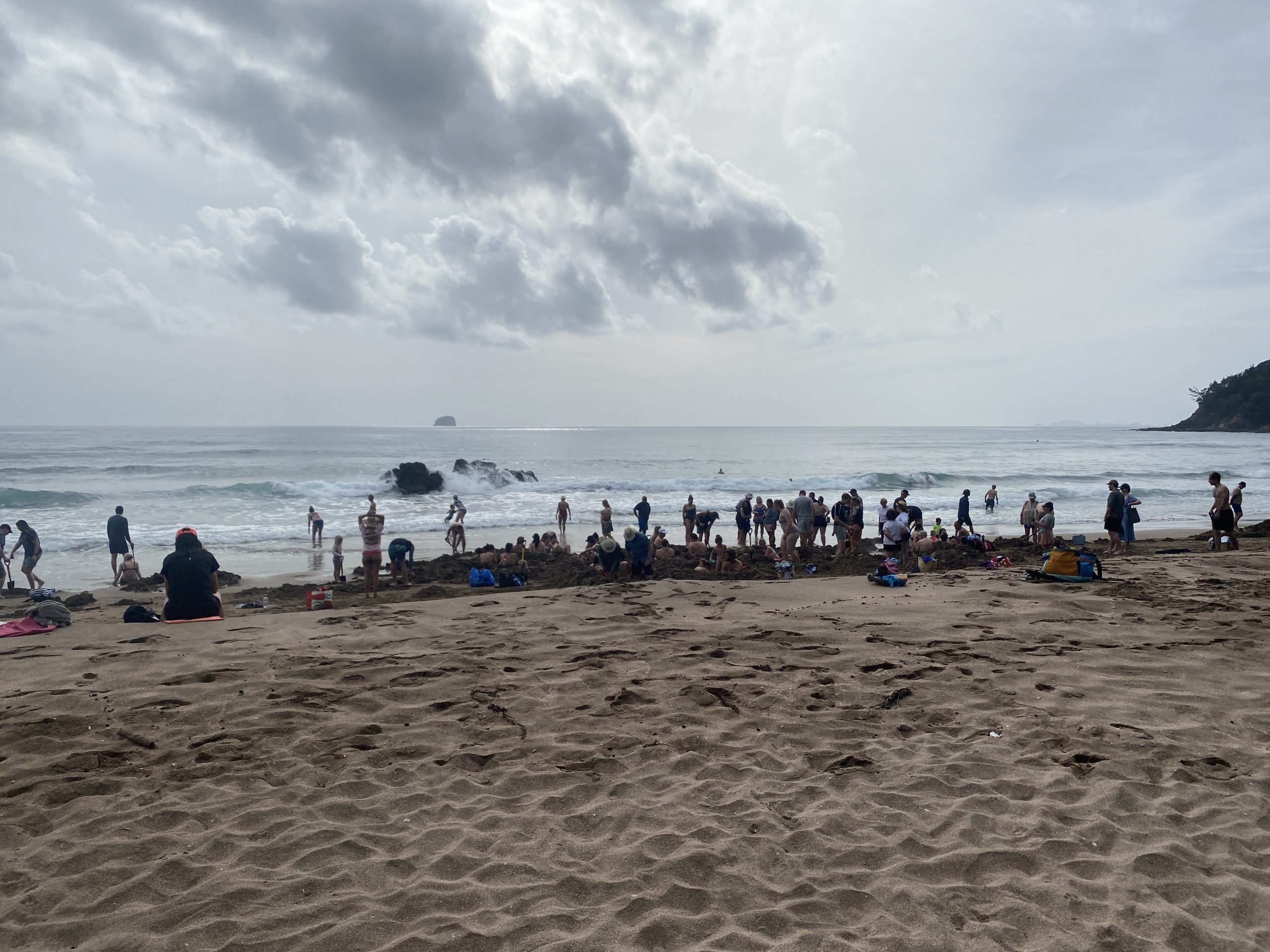
Hot Water Beach, New Zealand, 2026 Feb 26


It's our third trip to New Zealand, and after spending over a month on the South Island, we finally got around to visiting Hot Water Beach on the Coromandel peninsula of the North Island. It was as uninspiring as I had expected. Didn't miss much by not stopping here on earlier trips. The first trip (2019) we ran out of time, and wanted to see real thermal activity. Second trip (2023) we didn't visit Coromandel at all because of all the typhoon related road and trail closures.

Instead of going to the paid parking tourist trap area, we used the free car-park and walked along the beach toward the mass of people to the south.

We arrived about 10:00, an hour after low tide, and it was amusing to see people industriously digging away in the sand trying to construct their soak hole only for the rising seawaters to wash it all away with a couple of incoming waves.

Hot Water Beach, New Zealand

Some of the diggings did hit hot water, as we could see steam rising from some of the pits. Didn't stick around as the area seemed to combine the worst features of hot bathing springs and beaches (boring places for boring people).

Besides, in a few days will be able to report on real geyser activity (or the lack thereof).


Posted on

Changes at Hveradalir, Iceland.


Passing along an online report on changes at the Hveradalir geothermal area in Iceland that were posted at Iceland Monitor site.

Increased visible steam has been observed along the national highway through Hveradalir.

Geophysicist Ari Trausti Guðmundsson says that steam vents often form at relatively shallow depths in areas of geothermal activity and near hot springs.

“The best example is in Hverahlíð, south of the road leading up to Hellisheiði, where drilling was carried out for the Hellisheiði Power Plant. Suddenly, steam began rising from the hillside somewhat farther east,” he says.

Photos: Steam rising from the ground near the Ring Road

Back in August 2024 there was a landslide in the same area that exposed some buried features.

The landslide that took down material from the southeast side of Skíðaskálinn in Hveradalir in mid-July has probably broken the top layer of the soil above a steaming hot spring.

It is most likely that the combination of steam activity and high precipitation caused the landslide to occur at this time.

Photos: The landslide appears to have exposed a steam geyser

The main thermal area has a walkway and is easily accessible from the highway. We stopped in there when we visited in 2023. I remember a report from back then about steam appearing along the highway, visible in a traffic webcam view, but can't find that report now. So this activity may not be that new.