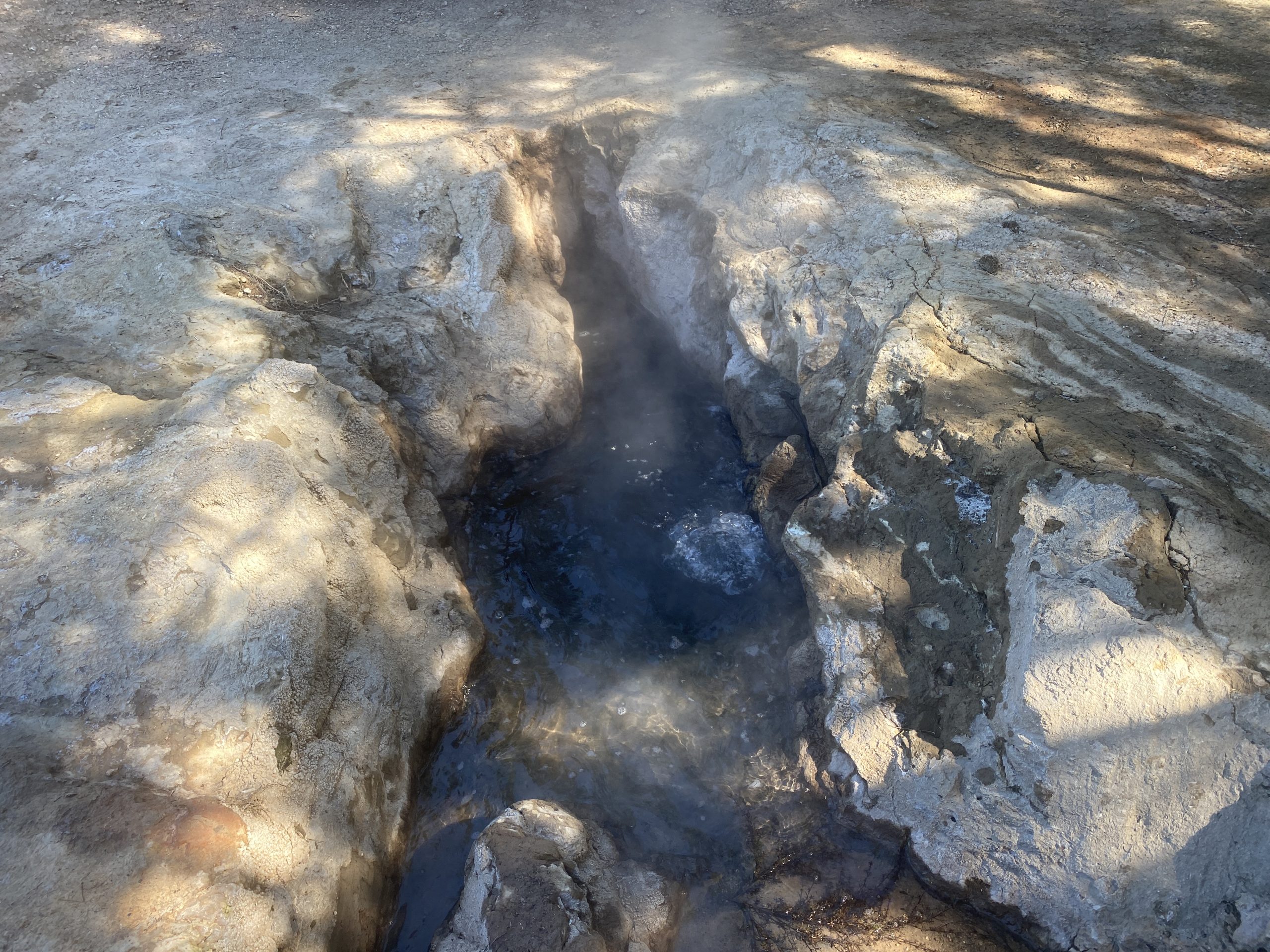
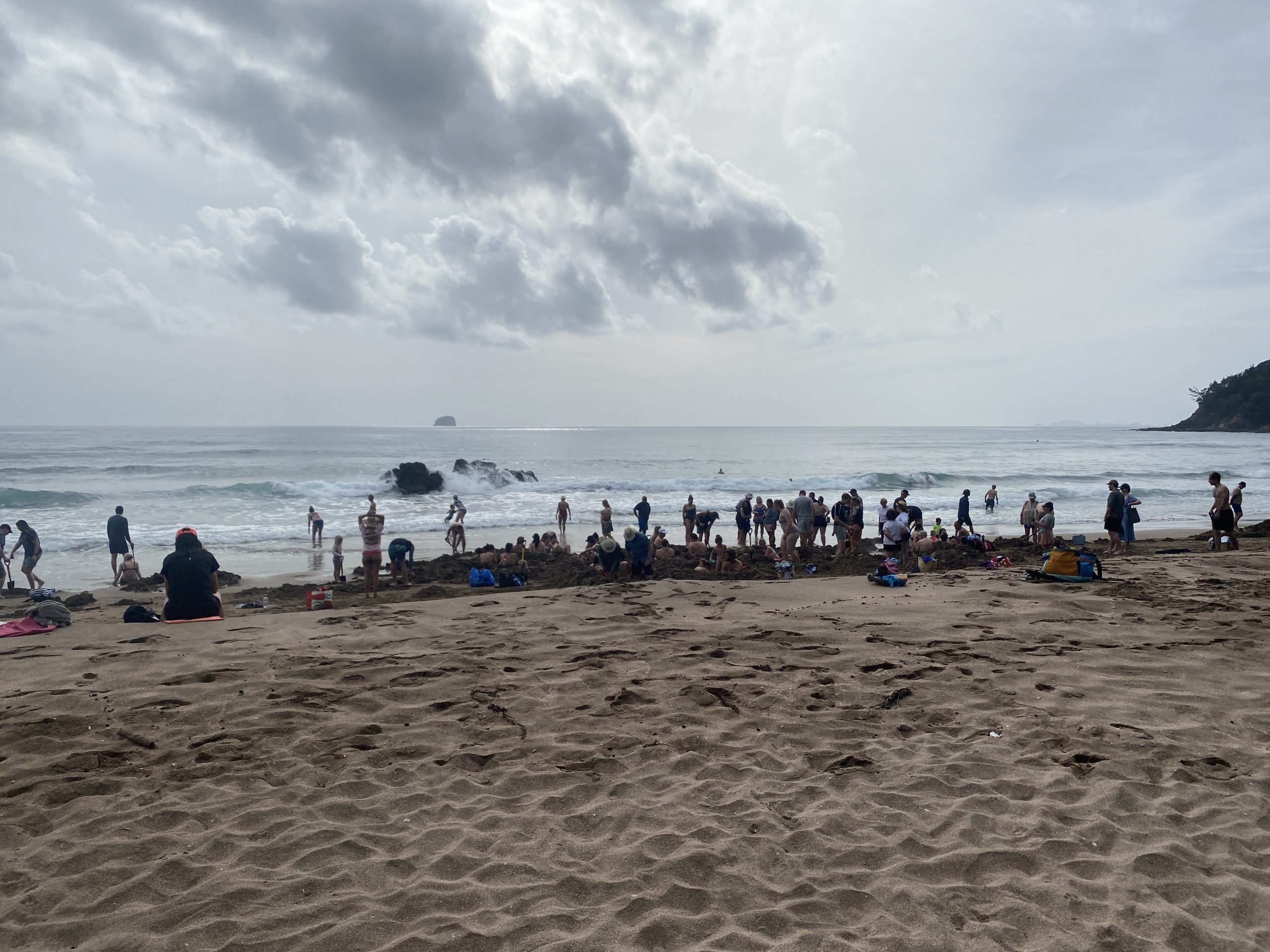
Today was the day we took to the waters of Rotomahana by kayak to see geysers. Turned out to be an excellent day. It was cloudy at first, but quickly cleared into a cool, mostly sunny day.
We met our guide at a little after 0900 at the Waimangu visitor center and cafe. Turns out she was the same guide we had had three years ago, and was late because sheep were being moved between paddocks. (We are in New Zealand, remember?) This time we were joined by Graham Meech.
Took the bus down to the water and were on the lake by 0930. The features are all along the lakeshore, both above and below the water. There were perhaps a couple of dozen little spouters right on the water's edge. Which is surprising, as the lake level varies, and the activity depends on that level.
Recording activity while operating a kayak can be difficult, so I tried something different this time. I bought a mount for my GoPro camera that consists of a neck collar with a camera attachment, and wore this. It makes it easy to turn on/off, and just let it record while paddling. It can also be held and pointed manually when needed. The only problems were that it sometimes would get tilted, or blocked by my paddling. But with the timestamp, it made it possible to save all the times of eruptions we saw, and to review what was seen on an overwhelming day.
There are several bays separating the thermal activity, so it's not all visible at once. [I will probably update this posting in a week or so after we return home with proper or corrected names. I don't have the reference materials and maps here.]
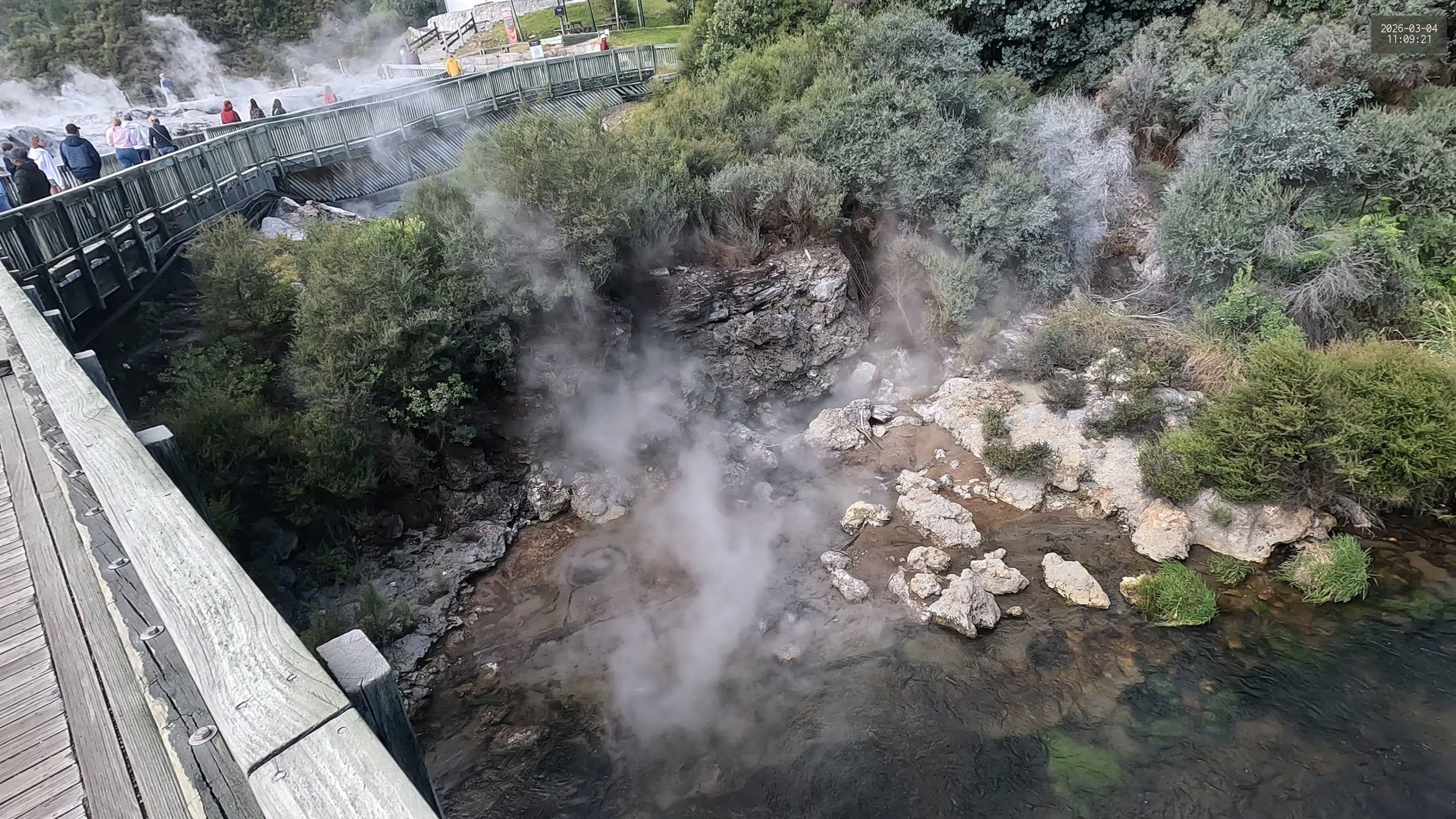
In the first bay, we saw a number of fumaroles and steam vents well above the lake level, but the only water was from a small vent about 1/2 meter above the lake that was pouring out water.
The next bay is where the Angel Wings is located. [I need to verify names here.] Most noticeable is a perpetual spouter erupting up to a couple of meters high inside an alcove, The alcove is surrounded by golden yellow thermophilic slime. Along the lake were a couple of small spouters flowing directly into the lake.
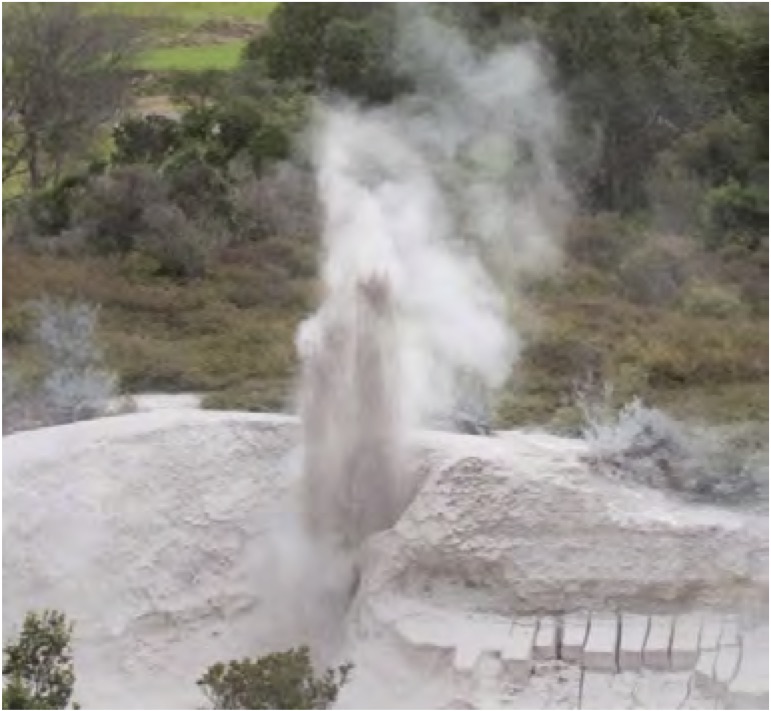
Also here is a set of unique formations. I've referred to this as "Angel Wings", but it appears that I was wrong. Our guide didn't known of a name, but said she called it "Oyster", and that's good enough for me to use as a name. It consists of a couple of sheets of sinter and does look like an oyster or clamshell. (There's also a "Clamshell Spring" located along the creek leading from the Frying Pan Flats.) Every couple of minutes it would erupt a meter or two high for a few seconds. The force of the eruptions varied, from weak to once threatening Graham when get got a little too close.
At the point separating the next bay were some features just at or below the surface of the lake. A couple of areas of strong upwelling and splashing on the lake surface, and to the left a small spouter on a slightly raised platform noisily sputtering away. Farther into the bay were more fumaroles just above the surface of the lake.
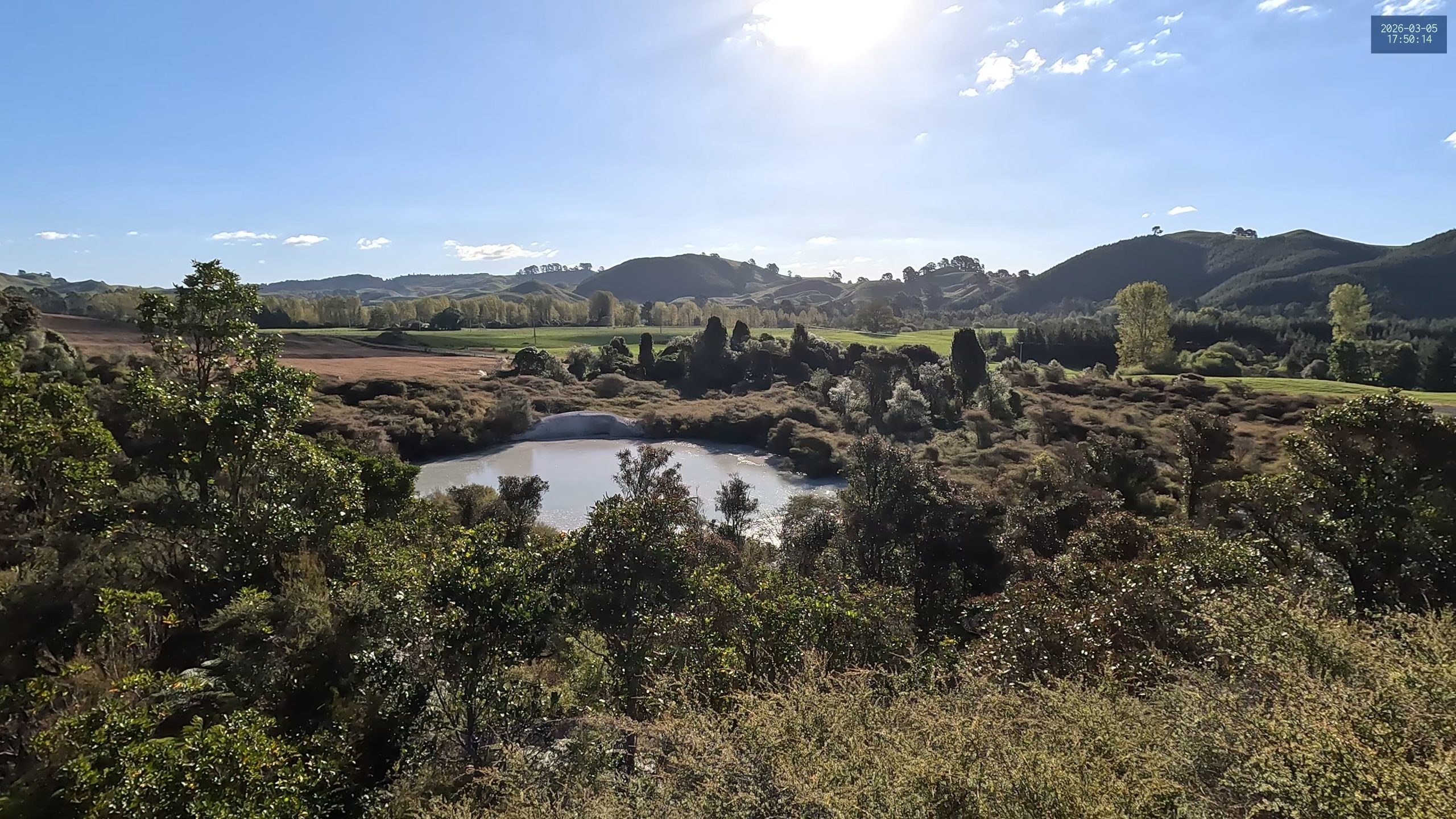
The next bay didn't have any thermal activity, so we didn't enter into it.
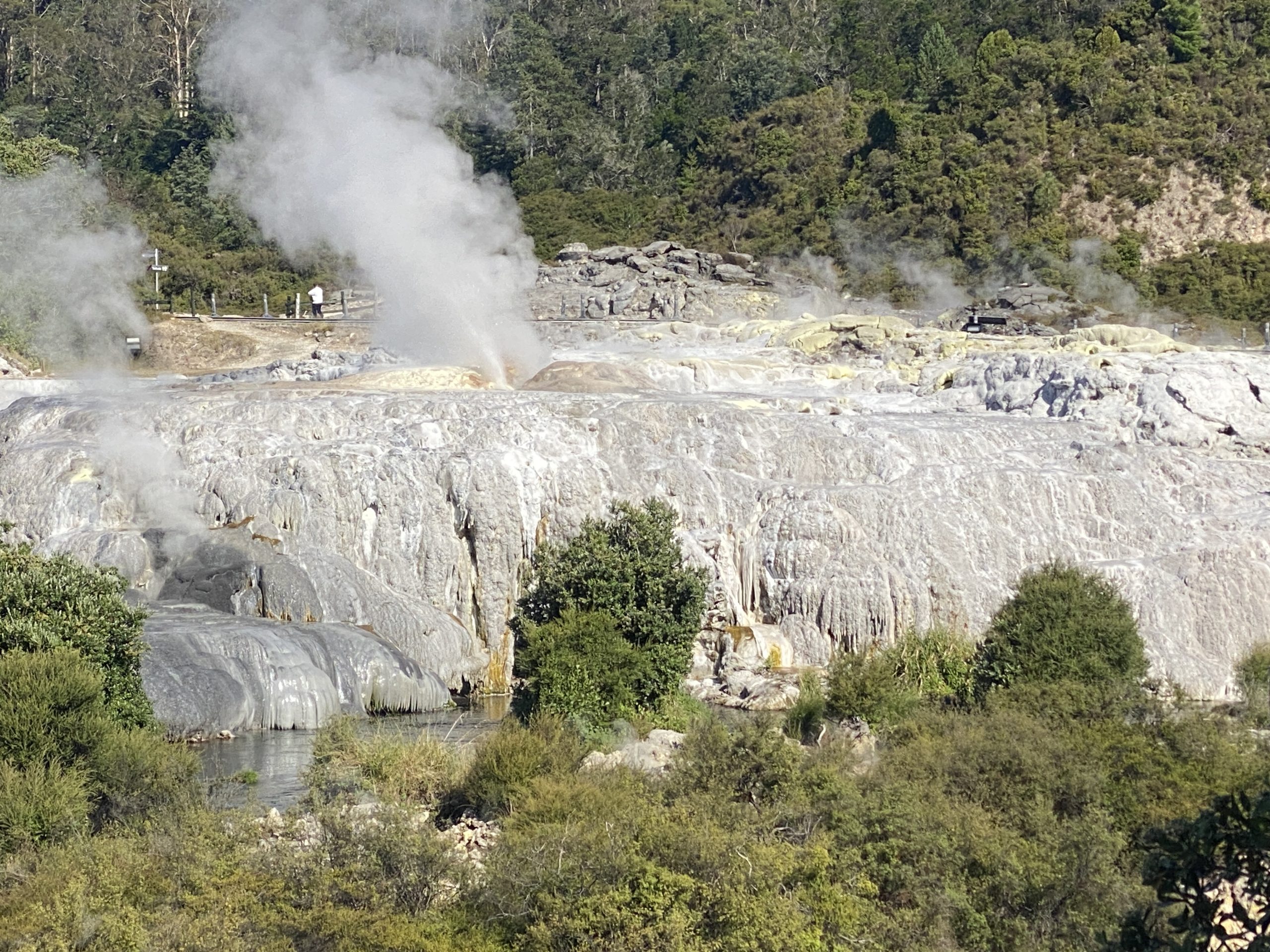
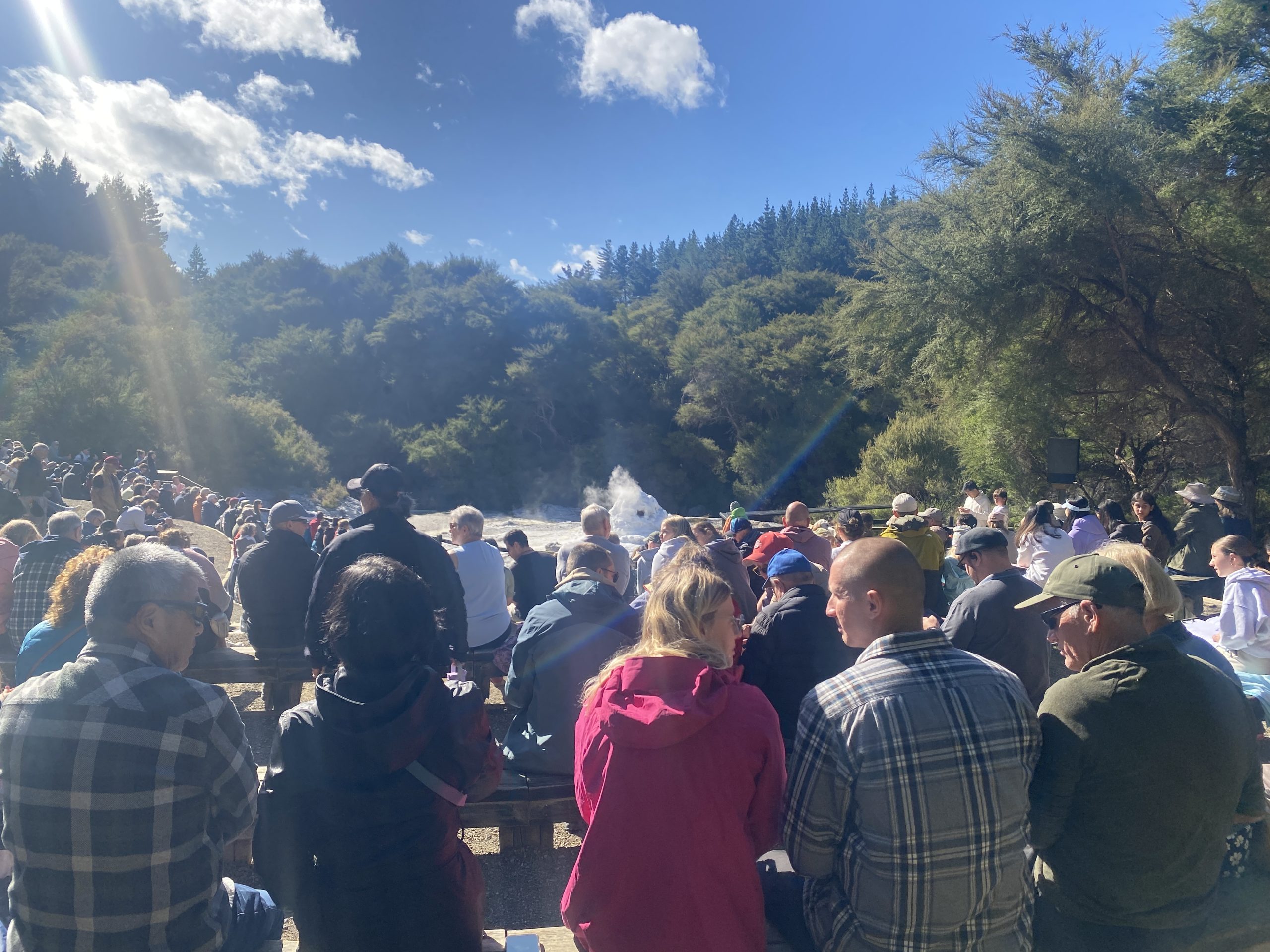
In the next bay was the primary attraction for the day— Pink Terrace/Otukapuarangi Geyser. One of the goals of this trip was to maximize the amount of time to observe this geyser, and were successful. After seeing few eruptions we went on to the point separating the bay from the next one. This was the last area of thermal activity.
After seeing at least seven eruptions of Pink Terrace/Otukapuarangi from the kayaks, our guide suggested we put ashore for lunch. This was a surprise, and we did not expect to be going ashore. As it turns out, it's common on this tour to have lunch on the beach of the bay we skipped, but I guess we were so enthusiastic about the geyser that she was willing to do us a favor. So sat down on some on some rocks at the edge of the lake, rocks that were warmer than just being out in the sun. (Graham said he had a small steaming crack a couple of feet from where he was sitting). We ate our sandwiches and pastries while the geyser erupted three times. The only disadvantage was that it was not possible to see the splashing at the start.
The intervals were about 8 to 9 minutes apart, and the durations varied a bit. At first they were about 100 seconds, while later they were over two minutes long. I would estimate the height of most of the eruptions to be about 10 meters, but some of my videos show some nice spikes going well above the general mass of the eruption. It was comparable to Kereru in height.
After the lunch we watch one more eruption from the kayaks, then headed back the way we came. We stopped in for a couple of eruptions of Oyster, then returned to the starting point.
Due to storms and wet weather of the past few years, a number of the trails have been re-routed or closed. A portion of the walkway following the creek is closed, a stretch with a number of small fumaroles and spouters. The Mt.Haszard side trail is closed, but when we walked that in 2019, we figured there was no need to do it again as there is a lot of climbing up and down and nothing but overgrown former viewpoints.
There was also a collapse of a cut in the trail near Iodine Spring requiring the rerouting of the trail up and around. This had the effect of making it much easier to see into Iodine, an actual improvement despite the steepness of the bypass.
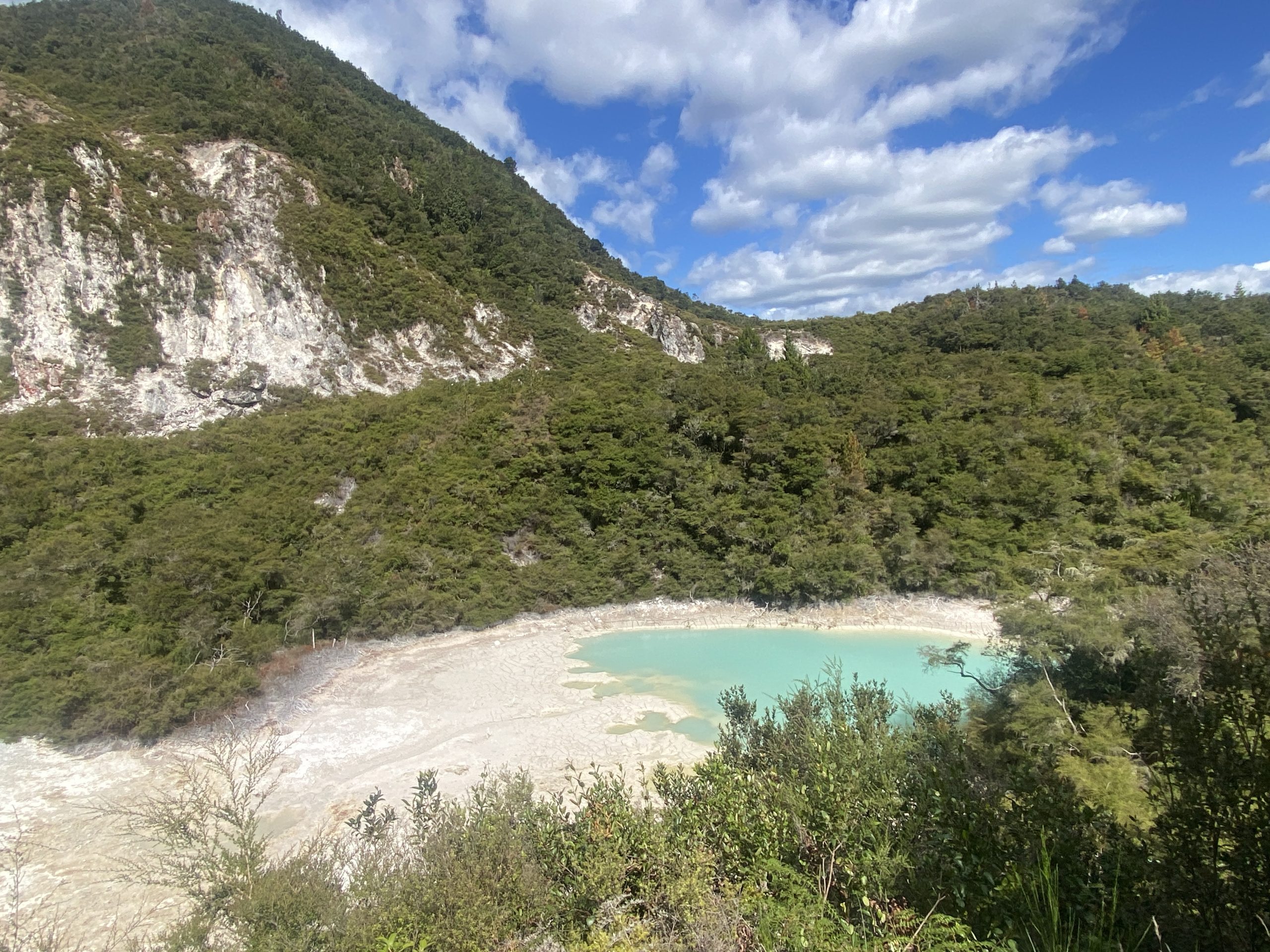
On the morning bus ride out, the driver mentioned to the guide that Inferno Crater was overflowing. This was great news, as Inferno Crater has a cycle lasting around 38 days where it will come up to overflow for maybe a day. One of the reasons we weren't reluctant to leave the lake was because of this. As it turned out, the overflow probably stopped around the time we were having lunch. There was just slight overflow at the base of the runoff when we got there.
Another change from our previous visit is the change in the availability of toilet facilities. Previously the only indoor plumbing in the valley as at a building at the Warbrick Terrace. That building is now gone, so much so that I couldn't see where it had been. Instead there are more modern flush-type toilet as the three bus stops.